
How SPVs Work in Real Estate Tokenization: Title, Ring-Fencing and What to Check
In real estate tokenization, a special purpose vehicle (SPV) is a separate legal entity set up to own a property. The SPV holds the title, signs the leases and receives the income; the tokens represent interests in the SPV, as defined in the offering documents. The token never holds the property - the SPV does.
If you have read what a real estate token represents, you know that most tokens are interests in an entity rather than in a building. This article looks at that entity: why it exists, what it does day to day, who runs it, and what you should verify about it before investing. It is the part of real estate tokenization that happens entirely off-chain, and it is where much of an investor’s legal position is built.
What is an SPV in real estate?
A special purpose vehicle is a company or similar legal entity, such as a limited liability company, created for a single, narrow purpose: owning and operating one asset or one defined group of assets. It usually has no other business and no unrelated obligations.
SPVs are not an invention of tokenization. Real estate has long used them in joint ventures, property financing and fund structures, because a single-asset entity is easier to finance, to value and to sell. Tokenization adds one thing: ownership of the SPV is divided into units that are recorded as tokens on a blockchain. If you look at the process from the property owner’s side, our guide to property tokenization for asset owners shows where the SPV fits in the issuance timeline.
Why doesn’t the token hold the property title directly?
Because a token cannot sign a deed. Property title is recorded in a land registry under national law, and the registry generally recognizes individuals and legal entities, not blockchain addresses. Transferring title typically requires formalities, such as notarial deeds or registry filings, that a token transfer does not satisfy on its own.
An SPV solves this with a clear division of labor:
- The law handles the property. The SPV is the registered owner. Leases, insurance, maintenance contracts and any financing are signed in its name.
- The blockchain handles the investor register. Units of the SPV, or economic interests in it, are represented by tokens that can be recorded, verified and transferred between KYC-verified investors without re-registering the property.
- The offering documents connect the two. They state what each token represents in the SPV and which rights follow from it.
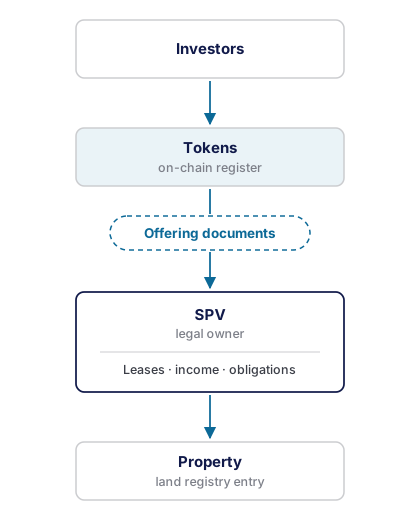
As a result, interests in the property can change hands at the investor level many times while its legal owner stays the same.
What does ring-fencing mean, and why does it work both ways?
Ring-fencing is the main reason SPVs exist. It means the asset and its obligations are kept inside one entity, separate from everything else. It works in two directions.
It keeps outside problems away from the property. If the sponsor who set up the structure, the platform, or another project in the same group runs into financial trouble, the property sits in a separate legal entity. As a rule, creditors of those other parties have no direct claim to an asset owned by a different legal person. How strong that separation is in practice depends on the jurisdiction and on how the SPV is set up, which is why it belongs on your checklist. We walk through the platform side of this in what happens if a tokenization platform fails.
It also limits what stands behind the property. The ring-fence keeps other projects’ problems out, and it also keeps other resources out. If the property underperforms, the SPV’s obligations stay with the SPV, and investors are exposed to that one asset. No sponsor’s balance sheet automatically covers a shortfall unless the documents say so.
For an investor, this two-way effect is the point: you get exposure to one specific property, with its own income, costs, debt and risks, and not to anything else. That is clarity about your exposure, not protection from market risk.
What does an SPV actually do?
Over the life of a tokenized property, the SPV is the entity that acts. Its typical functions:
- Holds title. The SPV is the registered owner of the property, or of the entity that owns it.
- Manages leases. It signs lease agreements with lessees, collects rent and enforces lease terms, usually through a property or asset manager.
- Covers the property’s costs. Maintenance, insurance, property taxes and any debt service are obligations of the SPV.
- Makes distributions, if the documents provide for them. Net income can be distributed to token holders according to their rights. Timing and conditions come from the offering documents.
- Reports. It keeps accounts and provides the information the documents promise investors, such as occupancy, lease events and financial statements.
- Sells the property at exit. When the asset is sold, the SPV receives the proceeds, settles its obligations and distributes what remains according to the documents.
Each of these functions is carried out by people and service providers acting for the SPV. A smart contract can record token holders and support payments to them, but decisions and legal acts happen at the SPV level.
Who manages the SPV?
This is the question investors most often skip. An SPV usually has no staff of its own, so someone must act for it. Typical roles include:
- Managers or directors who legally represent the entity and sign on its behalf.
- An asset manager or sponsor who runs the property: leasing, maintenance, budgeting and, eventually, the sale.
- The tokenization platform, which typically handles investor onboarding, KYC/AML checks, the token register and investor communication.
- Token holders, who may have governance rights, such as voting on a sale or on replacing a manager, if the documents grant them.
The balance between these roles is set out in the SPV’s constitutional documents and in the offering documents. Read who can make which decisions, and what token holders can do if they disagree.
What should investors check about an SPV?
Before investing, look for clear answers to these questions:
- Which entity owns the property? Name, jurisdiction and registration number, plus a land registry extract showing it as owner.
- Is the SPV single-purpose? Its constitutional documents should limit its activity to the asset in question.
- What does one token represent in the SPV? Equity units, an economic interest, or something else.
- Is the structure multi-level? If the issuer holds shares in another entity that owns the property, every level should be documented.
- What debt does the SPV carry? Lenders with security over the property are typically repaid before equity holders.
- Who manages it, and can they be replaced? The names of managers and asset managers, and the procedure for changing them.
- What governance rights do token holders have? Voting thresholds, information rights, and decisions reserved for holders.
- What happens at exit? Who decides on a sale, how proceeds are distributed, and how tokens are redeemed or cancelled.
- Who can receive the tokens? Many offerings restrict transfers to KYC-verified investors; the rules follow from the law and the offering documents, and the platform enforces them.
For a checklist that covers the platform rather than the SPV, see is tokenized real estate safe?
How is Stockenn structured?
Stockenn uses a DAO LLC structure, described on our security page as a transparent legal wrapper that connects token holders to the property-owning entity.